

Value for customers = value for investors
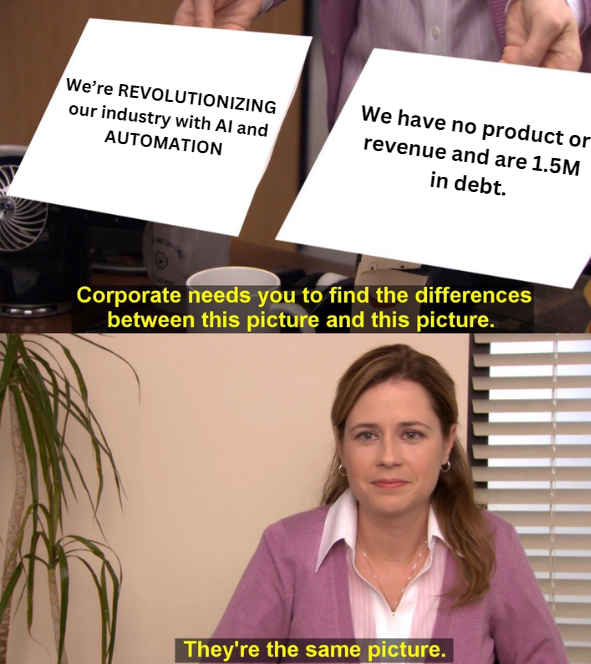
We like to think investors are wowed by stories of “industry disruption” and “creating fundamental shifts” and “revolutionizing XYZ forever”.
But it turns out they’re a lot more impressed by statements like “We save X customer $Y per year.”
When they first find out about your company, their only questions are:
1. What do you do?
2. Who do you do it for?
3. Is it valuable?
The faster you answer those, the faster you can start having productive investor conversations.
Big talk doesn’t convince them your company is valuable. In fact it’s the exact opposite - many investors hear words like “revolutionizing” and think you’re putting a buzzword wrapper around a nothing product.
To show an investor you have something valuable, show how you create value for your customers.
It might sound simple, but for most startups, this is the weakest part of their deck.
Not because they suck - because they don’t realize other people don’t already know how they make money and why customers pay for their stuff.
But by omitting it, they make the rest of the deck completely meaningless.
How to fix this in your deck
Here are some tactical ways to make sure your deck communicates your value properly:
1. Have a strong one-liner
Use one-liners like “Helping (customer) achieve (dream outcome) without (inconvenience).” Some examples here. Keep it focused on the customer and how you make them better off.
2. Have a killer intro slide
The first slide in the body of your deck should quickly explain exactly what you do and why investors should be excited. Think traction, case study/ROI data, market opportunity, etc. Examples here.
3. Master the business model slide
You should be able to describe how you make money in one sentence. This slide is just a slightly expanded version of that sentence, typically following the product slide.
Big tip for this one: make sure it’s clear why customers pay as much as they do for your thing.
4. Have an ROI/performance-focused slide
A good product performance slide shows a reasonable measurement or proven case study demonstrating ROI typically in time savings, money savings, or just revenue/income. If you get this right, it can set a much more authoritative tone for the rest of the deck.
Some example headlines for this slide are “We save (customer group) X labor hours/year” or “We cut XYZ costs by 65% and increase speed by 50%.”
Hope this helps you tie your story together a bit better. If you have 60 seconds, I’d love your thoughts on the DECKHAMMER here. It’s an anonymous feedback form and will help me make sure I’m keeping these relevant. Have a great weekend!
Best,
Nathan