

How often do you change your story?
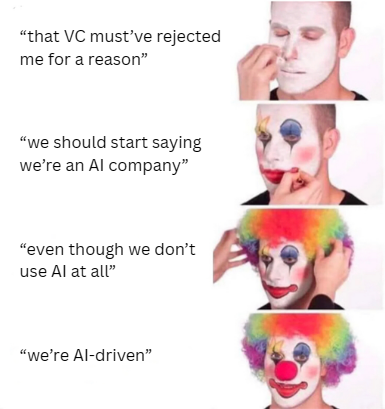
Some founders are rock solid in their story. They know what they’re building, why it’s valuable, why they’re excited about it, and why other people should be too.
Others are less so. They get one VC rejection and rewrite their entire deck. They spend all their time trying to conceptualize their product’s value and why it matters. And whatever answers they come up with never last.
So what are the differences between these two types of founders? And when is the appropriate time to change your story vs. not?
Rock-Solid Founders
When you get rejected by an investor, it’s pretty hard not to assume something is wrong with you or your company.
But a great founder stays the course. They don’t slow down outreach, they don’t cancel their upcoming meetings, and they don’t rework the entire deck.
Instead, they accept that the investor who rejected them simply wasn’t a fit for their business, and they keep looking for someone who is.
These are usually people who have done a lot and seen a lot. They’re experienced founders who know how to simplify something to its bare bones, who have a strong BS meter, and who started their business on the knowledge that it genuinely creates value.
And most importantly, they’ve seen enough pitches to know that no matter how good of an investment opportunity a company is, most investors will reject them.
Under-confident Founders
When founders aren’t as resilient, it’s a result of the opposite - they’re new to the game, haven’t seen hundreds of pitches or spoken with hundreds of investors, and didn’t fully understand what they were getting themselves into.
So they think they need to conform their business to the VC world rather than find the rare VC who’s a genuine fit for their business.
When should the story change?
With all of this being said, you don’t want to be a psycho who thinks they have a good story when it actually sucks.
And you also don’t want to be overly self-conscious about your story when it’s perfectly fine.
The best sign that the story needs to adjust is investors not understanding it.
If they’re asking about things they should’ve got from the pitch, have a suspiciously low number of questions, or don’t share any real thoughts about your company with you, those are good signs they just don’t get it.
If they ask the right questions, share thoughtful feedback, and still reject you, it’s more likely that it’s just simply not a mutual fit with your business.
What can new founders do?
If founders haven’t found their “rock solid” stride, there’s really only one thing to do: get smart people outside of your business to help you build your story.
When we’re deep in the day-to-day of running the business, we form blindspots. Smart people outside the company don’t have those.
This is a huge reason DECKO works, and it’s THE reason to find mentors who have your best interest at heart ASAP.
Good luck with your raise and if this was helpful, feel free to share it with a founder friend.
Best,
Nathan